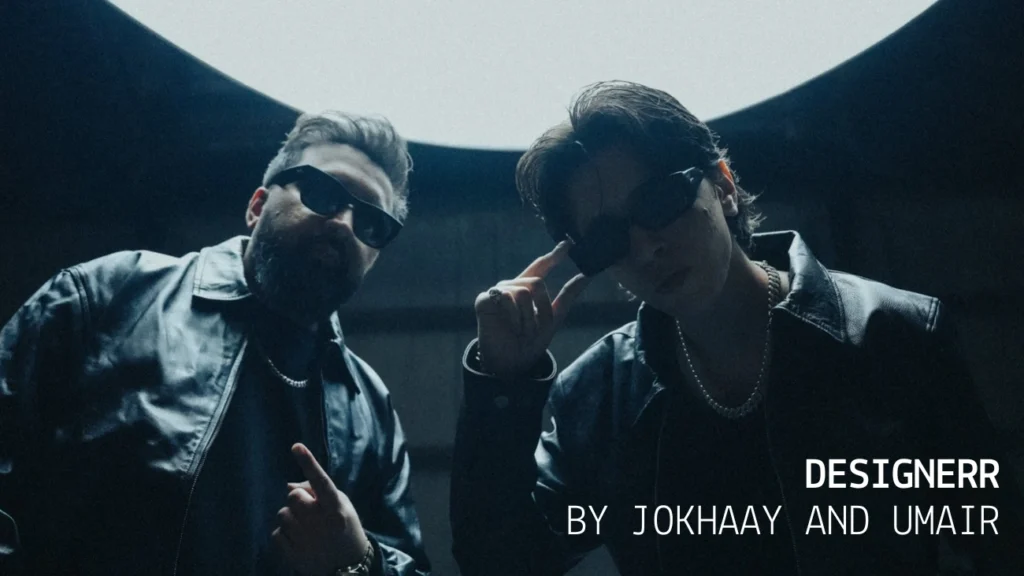
Jokhay released his second studio album, 33 Years Later, and it already feels like a moment the Hip-Hop scene has been quietly preparing for.
Following the impact of his previous work, this album marks a clear step forward in Jokhay’s journey as a producer, curator, and creative anchor within Pakistani hip-hop. 33 Years Later doesn’t arrive loudly; it arrives with weight built on anticipation, legacy, and trust in craft.
A Carefully Curated Collaboration
The album brings together a formidable list of collaborators: Talha Anjum, Talha Yunus, Asim Azhar, Jani, Rap Demon, JJ47, Jevin Gill, and Shareh, voices that collectively represent different corners of the contemporary Pakistani music landscape.
Rather than feeling crowded, the features signal intent. Jokhay isn’t stacking names for spectacle; he’s assembling artists whose voices align with the emotional and sonic arc of the album. It reads like a producer fully aware of how collaboration shapes narrative.
Eight Tracks, One Direction
With eight tracks, including Spring Time, Meter 100, Way Back, Enemies, Hypnotise, Left Behind, Far Away, and Rock Bottom, 33 Years Later opts for conciseness over excess. In an era where albums often sprawl, Jokhay’s choice to keep the tracklist tight feels deliberate.
Every element of the album has been handled by Jokhay himself, production, mixing, and mastering, reinforcing the sense of a singular vision. Even the album’s visual language feels personal, with the cover art credited to Umair and Omer Khan, grounding the project further in authorship rather than outsourcing.
Rock Bottom as a Signal
The release of Rock Bottom, accompanied by its music video, offers a glimpse into the album’s emotional core. Featuring Talha Anjum and Asim Azhar, the track balances vulnerability with restraint. Written by the vocalists themselves, it feels less like a single designed for reach and more like a thematic anchor, suggesting that 33 Years Later may be more introspective than explosive.
A Scene Watching Closely
Online reactions already hint at the album’s cultural impact. Fans have expressed impatience, excitement, and disbelief, some joking that “eight songs aren’t enough,” others admitting they’re still living with Jokhay’s earlier work. One sentiment, repeated across platforms, captures the mood best: this feels like a milestone.
When listeners say things like “I can smell the revolution,” it’s less about hype and more about expectation, the belief that Jokhay isn’t just releasing music, but shaping direction.
More Than a Release
33 Years Later feels positioned as a response, not just to Jokhay’s own past work, but to the evolution of the scene he’s helped build. It’s an album rooted in control, collaboration, and clarity. Signaling a producer confident enough to let the music speak without excess explanation.
One thing feels certain: this isn’t just Jokhay dropping his second album. It’s Jokhay reinforcing why his presence continues to matter.